The wedding day moves quickly: champagne is poured, photos run a few minutes long, and suddenly your guests are ready to eat. Knowing how to book wedding catering well means creating a dining experience that feels generous, beautifully timed, and entirely suited to your Aruba celebration – without asking family or friends to manage the details.
For a villa wedding, beachfront celebration, or private venue reception, catering is more than choosing a menu. It is a coordinated plan for your guest count, setting, service style, dietary needs, bar, rentals, and timeline. The right culinary team lets you enjoy the moment while every course, cocktail, and final cleanup is handled with care.
Start With the Wedding Experience You Want
Before requesting menus or comparing quotes, decide how you want the meal to feel. A formal plated dinner creates an elegant, paced reception. A family-style feast feels warm and celebratory, with abundant platters passed around the table. Stations, a live grill, or a paella experience encourage guests to mingle and work especially well for relaxed outdoor weddings in Aruba.
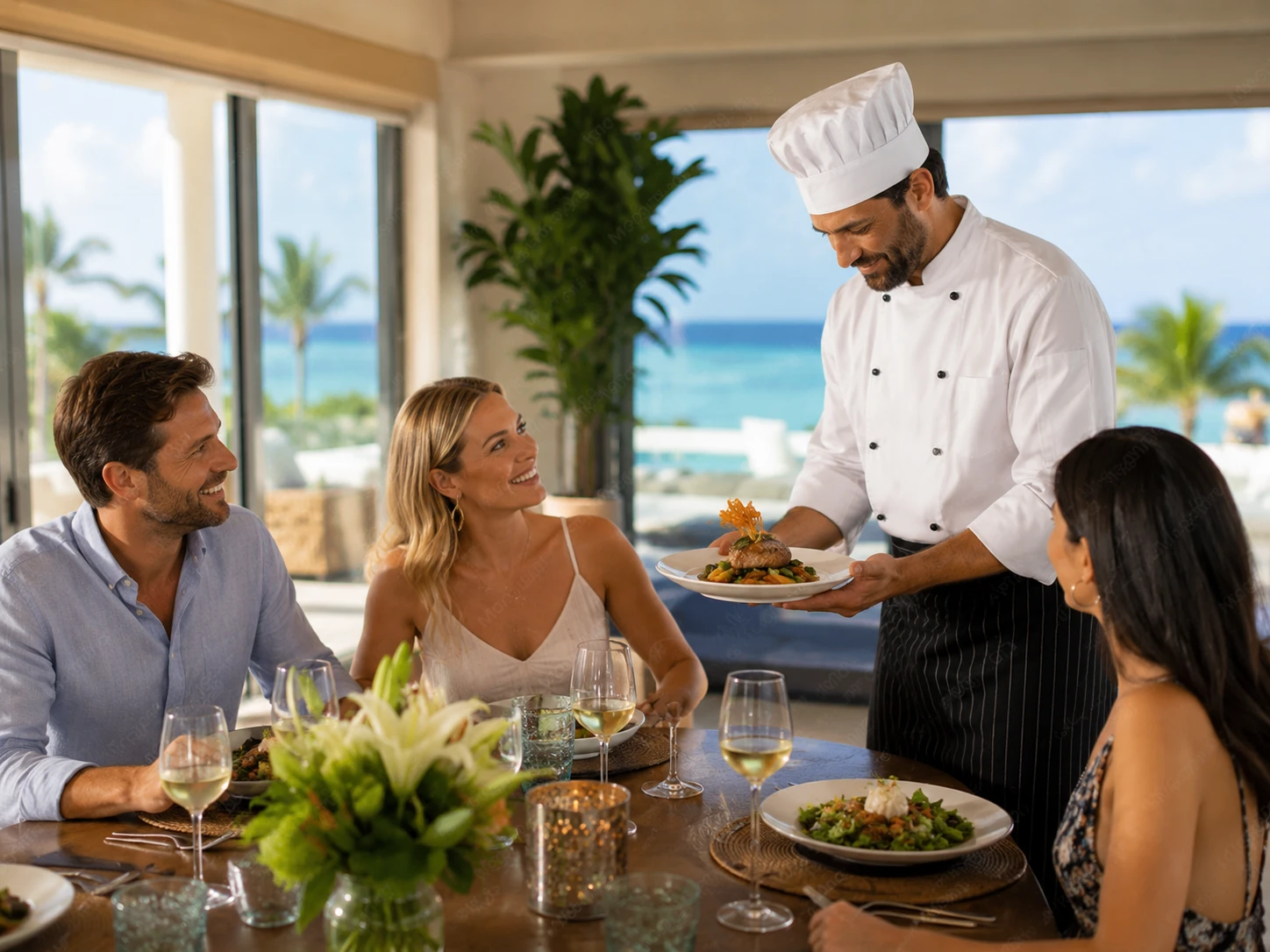
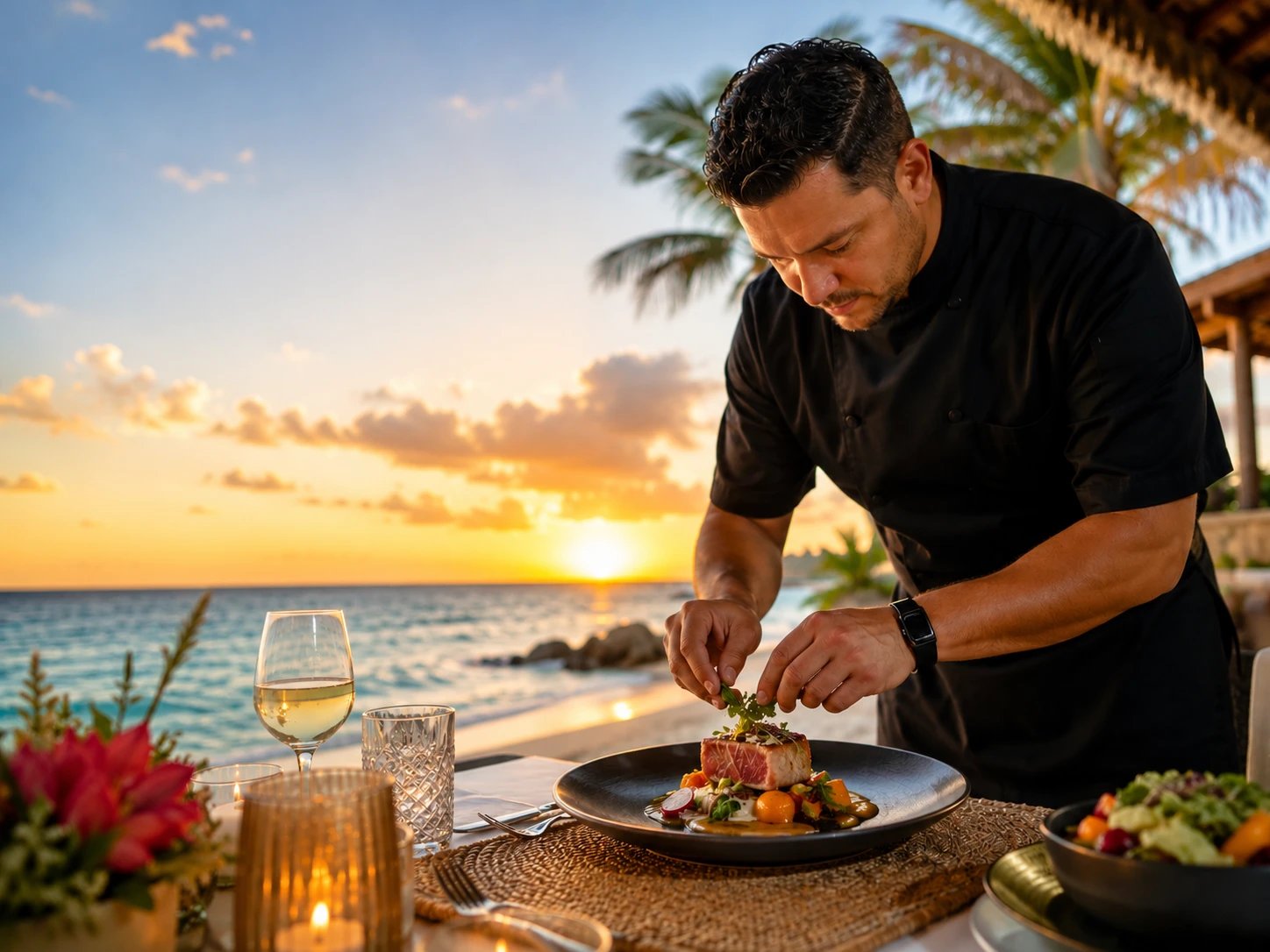
There is no single best format. A couple hosting 18 guests at a private villa may prefer a chef-led multi-course dinner with wine pairing and attentive table service. A 70-person beach celebration may be better served by passed appetizers, a buffet or station-style dinner, and bartenders who keep the evening moving. Your venue, guest list, budget, and schedule should guide the choice.
It also helps to decide whether catering will cover the full day or only the reception. Many destination weddings benefit from welcome cocktails, a light post-ceremony refreshment, dinner, dessert, and a late-night bite. These smaller moments can make guests feel thoughtfully hosted, particularly when they have traveled to celebrate with you.
Set a Realistic Guest Count and Budget Range
Caterers can offer more accurate guidance when they know your expected number of guests, including children and vendors who will need meals. Share your current count, then ask how close to the wedding date you must provide a final guarantee. It is wise to leave a small cushion for last-minute additions rather than ordering exactly to an early estimate.
Your catering budget should account for more than food. Depending on the plan, it may include chef and service staff, bartenders or mixologists, beverages, glassware, plates and cutlery, tableside setup, transportation, rentals, taxes, gratuity, and cleanup. A lower per-person menu can become less economical if essential service elements are priced separately.
When reviewing an estimate, ask what is included from arrival through breakdown. A clear proposal makes it easier to compare options fairly and protects you from discovering logistical costs late in the planning process.
How to Book Wedding Catering With the Right Team
The most valuable question is not simply, “What does the menu cost?” Ask whether the caterer has the right experience for your type of celebration and location. A talented restaurant chef may create extraordinary food, but an off-site wedding requires additional expertise: transporting ingredients safely, adapting to an unfamiliar kitchen, coordinating staff, setting a polished table outdoors, and keeping service on schedule.
For a destination wedding in Aruba, look for a culinary partner who understands private villas, local venues, island sourcing, and outdoor conditions. Wind, heat, access to refrigeration, kitchen equipment, and the distance from the prep area to the dining space can all influence the most suitable menu and service style.
My Private Chef Aruba matches hosts with vetted private chefs and event dining professionals based on the group, venue, and occasion. This curated approach is especially helpful when your vision calls for more than a standard package, such as a Caribbean-inspired cocktail hour followed by an elevated surf-and-turf dinner or a relaxed beachfront paella gathering.
During early conversations, share the details that shape execution:
- Your wedding date, ceremony time, and preferred meal time
- The venue or villa location, plus any kitchen and power details available
- Estimated guest count, including children, planners, photographers, and musicians
- Your preferred service style, menu ideas, and overall atmosphere
- Dietary restrictions, allergies, cultural considerations, and alcohol preferences
- Whether you need waitstaff, bartenders, rentals, dessert, or next-day brunch
A professional caterer should ask thoughtful questions in return. That is a good sign. It shows they are planning the entire guest experience, not simply delivering food.
Choose a Menu That Works in the Setting
A wedding menu should reflect your taste, but it should also be practical for the conditions. The best menus balance familiar crowd-pleasers with personal touches. In Aruba, that might mean fresh seafood, Caribbean flavors, locally inspired sides, premium grilled meats, colorful salads, and desserts that feel celebratory without being overly heavy in warm weather.
Consider the flow of the evening. Guests arriving after a ceremony often appreciate refreshing cocktails and substantial passed bites before dinner. If sunset photos overlap with cocktail hour, make sure there is enough food to keep everyone comfortable. If dinner begins later, a more generous cocktail menu or interactive station can prevent a long hungry stretch.
For the main meal, plated service offers a refined presentation and predictable pacing, though it requires precise guest choices and sufficient staffing. Family-style dining creates a festive shared-table feeling but needs room for platters and serving. Buffets give guests flexibility and can accommodate varied preferences, although the setup should be managed carefully to avoid lines. For smaller groups, a chef’s tasting menu can make dinner itself feel like the centerpiece of the celebration.
Do not treat dietary needs as an afterthought. Provide allergy and preference details early, including vegetarian, vegan, gluten-free, dairy-free, kosher-style, or other requirements. A skilled chef can build thoughtful alternatives that feel like part of the celebration rather than a separate, lesser meal.
Confirm Staffing, Bar Service, and Rentals
Great food can lose some of its impact if the room is understaffed. The number of servers needed depends on guest count, venue layout, and service style. A plated reception requires more hands than a casual buffet, while passed appetizers, water and wine service, cake cutting, and clearing plates all add to the workload.
Bar service deserves the same attention. Decide whether you want a full bar, beer and wine, signature cocktails, or a curated pairing with dinner. A dedicated bartender or mixologist allows guests to enjoy the celebration safely while the wedding party remains present with friends and family. For a private villa, clarify who will supply ice, glassware, mixers, garnishes, and bar tools.
Ask whether your quote includes tablescape elements and dining essentials. Some venues provide tables, chairs, and basic serviceware; others provide very little beyond the space itself. Your caterer or planner should coordinate closely so the dining area feels intentional, from linens and place settings to lighting and the location of the bar.
Book Early, Then Keep the Details Moving
For popular Aruba wedding dates, begin the catering conversation as soon as you confirm your venue and approximate guest count. Booking early gives you more choice in chefs, service teams, and menu availability, particularly for holiday weeks and peak travel seasons. It also gives your culinary team time to plan sourcing and staffing with confidence.
Before you reserve, review the agreement for the deposit schedule, cancellation terms, final payment date, final guest-count deadline, and what happens if weather requires a change of location. Payment protection and clear written terms are particularly reassuring when planning from another country.
Once booked, schedule a final planning check-in several weeks before the wedding. Confirm the timeline, menu, dietary list, vendor meals, floor plan, rain plan, contact person, and any final additions. If you are hosting a wedding weekend, this is also the ideal time to arrange an arrival platter, rehearsal dinner, farewell brunch, or relaxed poolside lunch for the days around the main event.
Give Your Caterer a Clear Wedding-Day Timeline
Your caterer should receive a working timeline that includes vendor arrival, ceremony start and end, cocktail hour, photo time, dinner service, speeches, cake cutting, and the planned end of the event. A flexible timeline is still useful because it lets the chef and service team prepare for likely transitions.
Assign one point person – a planner, trusted friend, or family member – to answer practical questions on the day. They can handle a small timing adjustment or guest-count update without interrupting the couple. This simple decision gives you permission to stay fully present.
The most memorable wedding meals do not feel like a production. They feel effortless to the guests: a cold drink appears at the right moment, dinner arrives beautifully, every guest has something they can enjoy, and afterward the space is quietly restored. Book the culinary team that makes room for exactly that, then sit back, relax, and savor your celebration in Aruba.