A villa dinner should feel like part of the vacation, not another event for someone in your group to manage. When choosing a buffet or plated dinner, the best option comes down to the rhythm you want for the evening: an elegant, paced celebration or a relaxed meal where guests can mingle, return for seconds, and eat on their own schedule.
Both formats can deliver a restaurant-quality menu in the privacy of your Aruba villa. The difference is in the flow of the experience, the level of service, and how naturally the meal suits your group, setting, and occasion.
Buffet or Plated Dinner: The Essential Difference
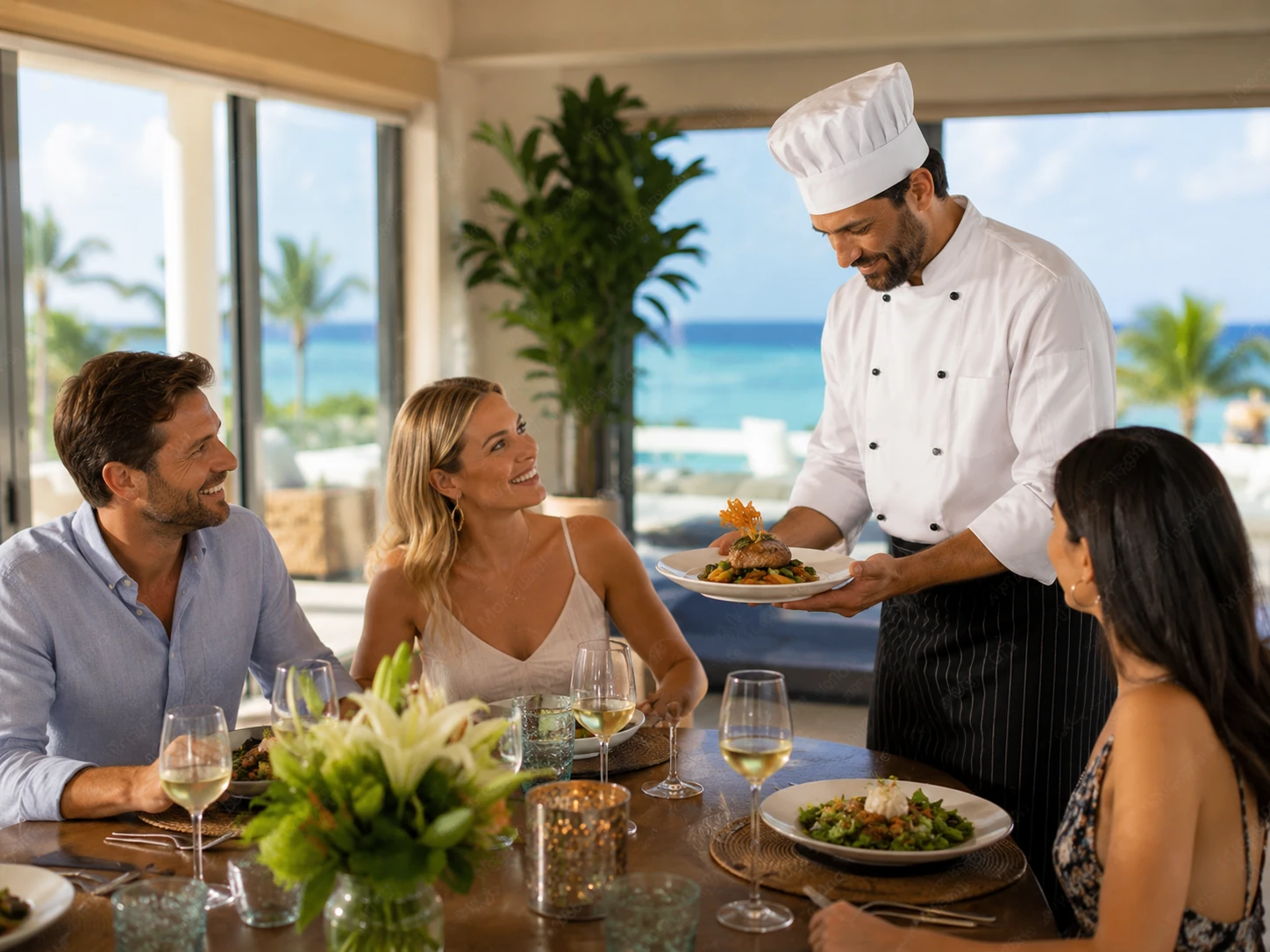
A plated dinner is individually portioned and served course by course at the table. It brings a refined, hosted feeling to the evening. Guests are seated, each course arrives with intention, and the chef and service team can create the kind of polished progression people expect from an anniversary dinner, intimate celebration, or elevated wedding reception.
A buffet dinner presents a curated spread for guests to serve themselves. It is still beautifully prepared and thoughtfully styled, but it feels more flexible and social. Rather than asking everyone to arrive at the table at once, a buffet lets the conversation move naturally between the terrace, pool area, bar, and dining space.
Neither is inherently more luxurious. A well-executed buffet with live grilling, fresh seafood, colorful island sides, and attentive staff can feel every bit as special as a multi-course seated dinner. The right choice is the one that supports how you want your guests to spend the night.
When a Plated Dinner Is the Right Choice
Choose a plated dinner when the meal itself is a centerpiece of the occasion. It works especially well for couples celebrating an anniversary, families marking a milestone birthday, wedding dinners, and smaller groups that want a more formal, unhurried experience.
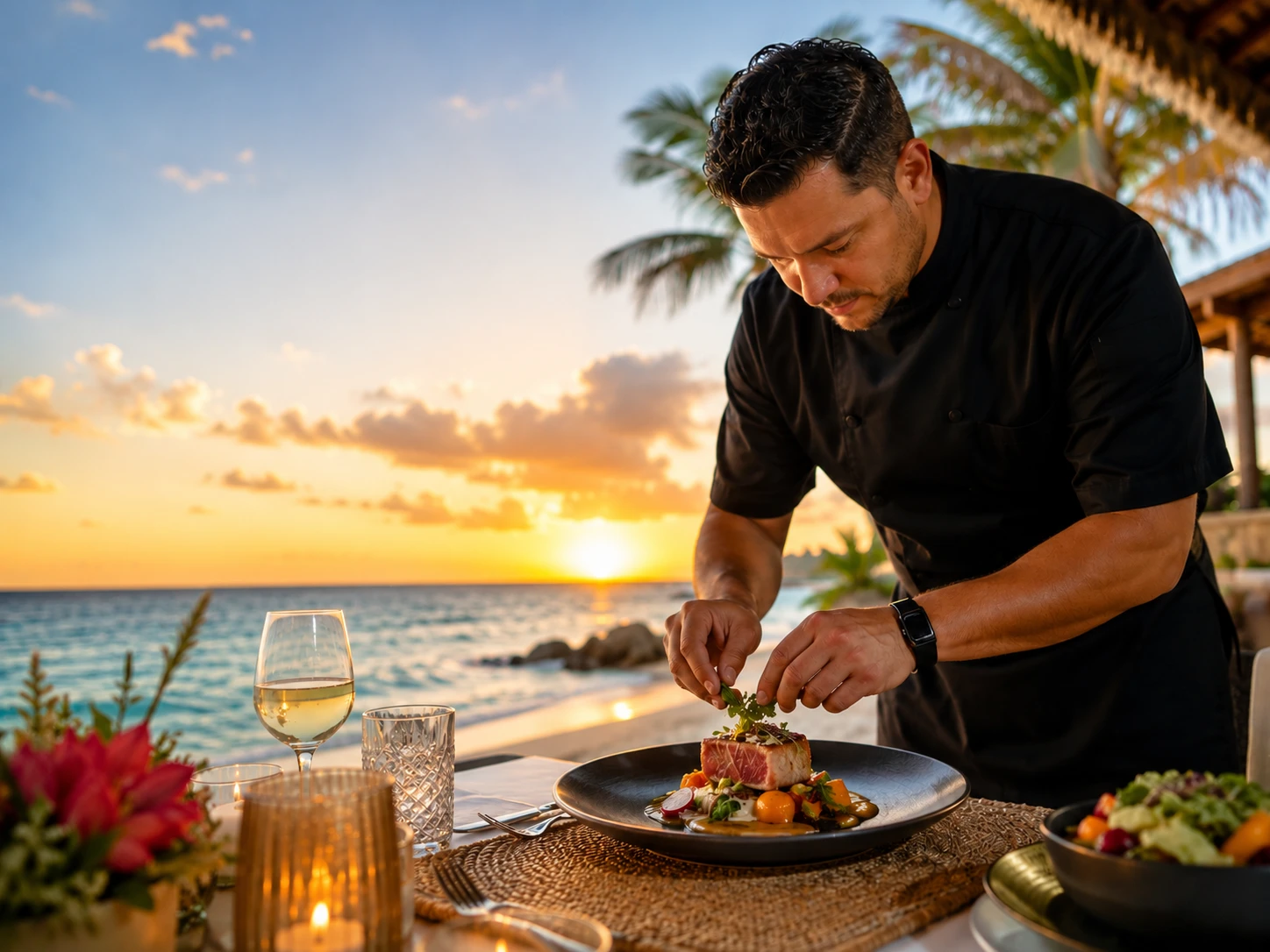
There is a certain pleasure in sitting down to a table already set for the evening, with each guest welcomed by a first course and a glass of wine. A plated format gives the chef more control over presentation, temperature, and timing. Delicate seafood, composed salads, tenderloin, thoughtfully paired sauces, and elegant desserts often shine in this setting because every plate reaches the table as intended.
Plated service also creates a natural structure. If you have planned a toast, a special announcement, or a wine pairing, courses give the evening a gentle cadence. Your group is together at the same time, which makes it easier to create those memorable, photographed moments without making anyone feel rushed.
This format does require more coordination. Menu selections may need to be collected in advance when guests have different entrée preferences or dietary needs. It is also best suited to a villa with sufficient table space, comfortable seating, and room for service staff to move gracefully. For a group that prefers to stay in swimsuits, wander in and out of the pool, or eat at different times, it can feel more structured than necessary.
Best occasions for plated service
A plated dinner is often the natural fit for an intimate chef’s tasting menu, a romantic private dinner, a formal villa celebration, or a rehearsal-style gathering where the host wants everyone to share one beautifully paced meal.
When a Buffet Makes More Sense
A buffet is ideal when flexibility matters as much as presentation. It is a favorite for larger family vacations, multigenerational groups, birthday gatherings, bachelorette parties, and casual welcome dinners, especially when guests arrive with different appetites and schedules.
Think of a sunset BBQ with grilled meats and fish, fresh salads, local sides, sauces, and dessert arranged on a generous display. Or imagine a paella experience where guests gather around the chef as the pan comes together, then serve themselves when it is ready. These meals create energy. They invite people to talk, sample, go back for a little more, and settle into the evening without the formality of assigned courses.
Buffets are also practical for varied dietary preferences. Rather than creating separate plated entrées for every guest, the menu can include several appealing choices: a seafood option, grilled chicken, a vegetarian main, vibrant vegetables, salads, and gluten-conscious sides. Guests have more control over their plates, and the meal feels inclusive without drawing attention to anyone’s restrictions.
For a villa stay, a buffet can be especially comfortable on the first or second night. Travelers may be tired from the journey, children may need an earlier meal, and some guests may still be unpacking or enjoying the pool. A relaxed service style lets everyone ease into vacation mode.
The trade-off is that a buffet does not offer quite the same synchronized, table-centered moment as plated service. Guests will stand, serve themselves, and eat at slightly different times. With thoughtful setup and professional staffing, however, the experience remains polished, abundant, and effortless for the host.
Consider Your Guest Count and Villa Layout
Guest count is one of the clearest decision points. Plated dinners are often most comfortable for smaller groups because service can remain personal and the table can stay cohesive. As the group grows, plated service may require more servers, more place settings, more space, and more detailed meal coordination.
A buffet tends to scale well for larger gatherings. It allows a generous menu without placing every guest at one long table, which can be useful at villas with several outdoor seating areas. Guests can dine at the main table, lounge nearby, or enjoy a cocktail while waiting for a second serving.
Still, the villa layout matters more than a simple headcount. A shaded terrace, a covered outdoor dining area, and a clear path from the kitchen to the table are all helpful for plated service. A buffet needs a stable, well-positioned display area where food can be kept at the proper temperature and guests can serve themselves without crowding the kitchen or bar.
Aruba’s outdoor settings add another consideration: wind. An experienced event dining professional will plan for secure linens, covered food where appropriate, and a setup that feels elegant while respecting the island environment. Sunset, lighting, and the distance between the kitchen and dining area also influence what will work best.
Service Level Changes the Experience
The meal format is only part of the decision. The level of service around it can transform both buffet and plated dinners.
For a plated dinner, dedicated waitstaff make the evening feel composed from the first pour to dessert. They can serve courses, refresh wine, clear discreetly, and keep the host free to enjoy the celebration. A bartender or mixologist can add a welcome cocktail, tropical aperitif, or signature drink that carries guests into dinner.
For a buffet, staff can maintain the display, replenish dishes, assist guests, clear plates, and ensure the experience never feels like self-catering. This is especially valuable when the menu includes live grilling, carving, paella, or other chef-led elements. The food stays inviting, and no one from your group has to monitor serving dishes or begin cleanup while others are still relaxing.
At My Private Chef Aruba, the chef and service approach can be matched to your occasion, group size, villa setting, and menu preferences. That curation matters because a birthday dinner for 14 has different needs than a beachfront wedding event or a quiet dinner for two.
Menu Style Should Guide the Decision
Some menus naturally favor one format. A composed three-course menu with plated appetizers, a choice of premium entrées, and a plated dessert is made for seated service. It emphasizes culinary detail and the feeling of being cared for at every course.
Menus built around abundance usually suit a buffet. Caribbean-inspired BBQ, taco spreads, Mediterranean grills, seafood feasts, paella, and grazing-style starters invite guests to explore. They also work beautifully when a group includes adventurous eaters, selective children, and guests who may want a lighter or heartier portion.
There is also a middle ground. Family-style service places generous platters at the table for guests to share. It feels more communal than plated service and more contained than a buffet, making it an appealing choice for families and friend groups who want a shared-table experience without a formal course-by-course dinner.
Ask These Questions Before You Decide
Start with the feeling you want at 8:30 p.m. Do you picture everyone seated over wine and dessert, or drifting between the pool, music, cocktails, and a beautifully stocked dinner table? Then consider whether your guests need menu flexibility, how much seating your villa offers, and whether the occasion calls for speeches, toasts, or a formal presentation.
Your budget should include more than food alone. Plated dinners can involve additional service staff and place settings, while buffets may require a larger food selection and a more substantial display. Neither format is automatically the higher-cost choice. The menu, guest count, staffing, rentals, and service enhancements determine the final investment.
The most memorable villa dinners are not the ones that follow a rule. They are the ones that let every guest feel welcomed, well-fed, and completely off duty. Choose the format that gives you that freedom, then let your chef handle the details while you sit back, relax, and enjoy Aruba together.